

A Guide for Measuring
Digital Marketing ROI
RESOURCE GUIDE
Track Results & Mazimize Returns
- INTRODUCTION

For many executives, Return on Investment (ROI) is the end-all, be-all. High-level decisions must always be made with the bottom line in mind, and any money going out of the company’s doors should bring back a greater value in return.
That’s a critical tenet of smart business. You don’t want to pay more for a sales lead than you would gain in profit.
Despite this focus, many business leaders find measuring digital marketing ROI a daunting task. They view it as an elusive shadow that cannot be grasped, much less quantified. This viewpoint is often a result of practicing years of traditional marketing and feeling a sense of helplessness about how to evaluate the web-based direction business has taken in the new millennium.
“Paralysis by analysis” results, with online objectives that are murky at best or nonexistent at worst. The goal of this guide is to eliminate the sense of helplessness that surrounds digital marketing ROI. Once you’re comfortable with how to measure it, you’ll have a stronger hold on your overall digital marketing ROI as well as ROI by channel and campaign.
One of the biggest questions many executives ask is: “Where do I even begin?” It’s a great question, one we’re asked all the time.

When Establishing a Baseline, Don’t Sacrifice “Good” for “Perfect”
Finding a starting point is often the most painful aspect of a business endeavor, and ROI is no exception. As we mentioned previously, many executives experience “paralysis by analysis” when it comes to establishing a preliminary baseline. This procrastination comes from not being able to corral all of the data to make a precise measurement
Aspiring for ideal precision is the first mistake. Once you accept that absolute perfection is out of your grasp, and that it’s okay to use averages instead of exact figures in some instances, you’ve already taken a giant step toward establishing that baseline.
It’s perfectly fine to start from scratch. Create a value for each product line or service—or whatever your unique vertical business segments happen to be—and work from there. It’s critical to remember that you’re not locked in to these figures, and that measuring your digital marketing ROI is a process that will evolve over time
A good, working framework is better than the perfect one that only exists in your mind.
Which Leading Digital Marketing Indicators to Watch
We’ve identified five leading indicators that allow you to gauge your digital marketing performance and that will serve as separate bellwethers to tell your overall ROI tale:
Each channel’s efficacy can be measured along the way—you don’t have to wait and see what the channel’s ultimate ROI says. For example, are your organic search numbers increasing? Are your paid advertising efforts delivering new leads?
These numbers tell you a variety of things. You’ll know which webpages your visitors are staying on, and which ones they aren’t. This informs you how effective your content is. Obviously, if your landing page has a high bounce rate, it needs testing to improve your campaign’s performance. You can also dig deeper to uncover traffic quality from referral sites, as well as advertising efforts.
This will tell you if you’re attracting the right audience and if your content offers are engaging enough. Site visits are always the goal, but the number that really matters is how many of those visitors become solid leads
After identifying visitor-to-lead conversions, you can start determining how many of those leads are sales-qualified. Knowing the lead quality of your digital marketing channels allows you to utilize time and money effectively, all while filling up your pipeline.
Since we’ve discussed tracking how many visitors become leads, this final leading indicator shouldn’t come as a surprise. It’s critical to evaluate how well leads are moving through your system and becoming loyal customers.
We understand that even as we explain these indicators and concepts, it’s easy to feel overwhelmed. You’re probably asking yourself “Who has the time to measure all of this?” Well, that’s what automation is for
Lorem ipsum dolor sit amet CONSECTUER IPSUM DOLAR ipsum dolo IPSUM

Lorem ipsum dolar

Lorem ipsum dolar

Lorem ipsum dolar
Technically, There’s More Than One ROIto Measure
Now that you have more insight regarding what goes into measuring digital marketing ROI, it’s time to break it down a little further. While you have an overarching digital marketing ROI to concern yourself with, it’s important to segment it into two separate measurements
Why dig into these ROI layers? For one, it gives you an understanding of the math that leads to the overall ROI. But more importantly, it also gives good marketers exactly what they need: valuable intelligence. If you know what campaigns work best on which channels, then that will most certainly play into your digital marketing strategy going forward.

Channel ROI:
A sound digital marketing strategy will focus on each individual channel. Whether it’s social, email, organic search, or pay-per-click (PPC), you need to be measuring each one individually.
Campaign ROI:
This takes us even further down the ROI rabbit hole. If you’re going to measure independent channels, then it only makes sense to measure the independent campaigns you launch on those channels.
Technically, There’s More Than One ROIto Measure
Now that you have more insight regarding what goes into measuring digital marketing ROI, it’s time to break it down a little further. While you have an overarching digital marketing ROI to concern yourself with, it’s important to segment it into two separate measurements
Why dig into these ROI layers? For one, it gives you an understanding of the math that leads to the overall ROI. But more importantly, it also gives good marketers exactly what they need: valuable intelligence. If you know what campaigns work best on which channels, then that will most certainly play into your digital marketing strategy going forward.
Channel ROI:
A sound digital marketing strategy will focus on each individual channel. Whether it’s social, email, organic search, or pay-per-click (PPC), you need to be measuring each one individually.
Campaign ROI:
This takes us even further down the ROI rabbit hole. If you’re going to measure independent channels, then it only makes sense to measure the independent campaigns you launch on those channels.
The Waiting Is the Hardest Part
The small problem with ROI in marketing—be it digital or traditional—is that it will never reward the inpatient executive. Why? Because it’s a lagging indicator. Just based on the idea of measuring channel and campaign, you can start to see that a variety of numbers play into that one big number, and that it takes time to cull true data that can teach you something about your customers.
That patience your marketer is preaching? It isn’t a stall tactic. A classic mistake that business leaders make is shifting digital strategies too quickly. You have to practice patience so that you can measure accordingly. That’s what allows you to tweak your campaigns instead of making wholesale changes.
The good news is you don’t necessarily have to twiddle your thumbs and wait forever for ROI to come in. Yes, ROI may be the tortoise, but there are some indicators that are more hare-like.
Which Leading Digital Marketing Indicators to Watch
We’ve identified five leading indicators that allow you to gauge your digital marketing performance and that will serve as separate bellwethers to tell your overall ROI tale:
Lorem ipsum dolor sit amet, consectetur adipiscing elit, sed do eiusmod tempor incididunt ut labore et dolore magna aliqua. Ut enim ad minim veniam, quis nostrud exercitation ullamco laboris nisi ut aliquip ex ea commodo consequat.
Each channel’s efficacy can be measured along the way—you don’t have to wait and see what the channel’s ultimate ROI says. For example, are your organic search numbers increasing? Are your paid advertising efforts delivering new leads?
These numbers tell you a variety of things. You’ll know which webpages your visitors are staying on, and which ones they aren’t. This informs you how effective your content is. Obviously, if your landing page has a high bounce rate, it needs testing to improve your campaign’s performance. You can also dig deeper to uncover traffic quality from referral sites, as well as advertising efforts.
This will tell you if you’re attracting the right audience and if your content offers are engaging enough. Site visits are always the goal, but the number that really matters is how many of those visitors become solid leads.
This will tell you if you’re attracting the right audience and if your content offers are engaging enough. Site visits are always the goal, but the number that really matters is how many of those visitors become solid leads.
After identifying visitor-to-lead conversions, you can start determining how many of those leads are sales-qualified. Knowing the lead quality of your digital marketing channels allows you to utilize time and money effectively, all while filling up your pipeline.
Since we’ve discussed tracking how many visitors become leads, this final leading indicator shouldn’t come as a surprise. It’s critical to evaluate how well leads are moving through your system and becoming loyal customers.
We understand that even as we explain these indicators and concepts, it’s easy to feel overwhelmed. You’re probably asking yourself “Who has the time to measure all of this?” Well, that’s what automation is for.
Build Your Own
Digital Marketing Toolbox
Did you think we expected you to break out your calculator and measure all of this on your own? Of course not.
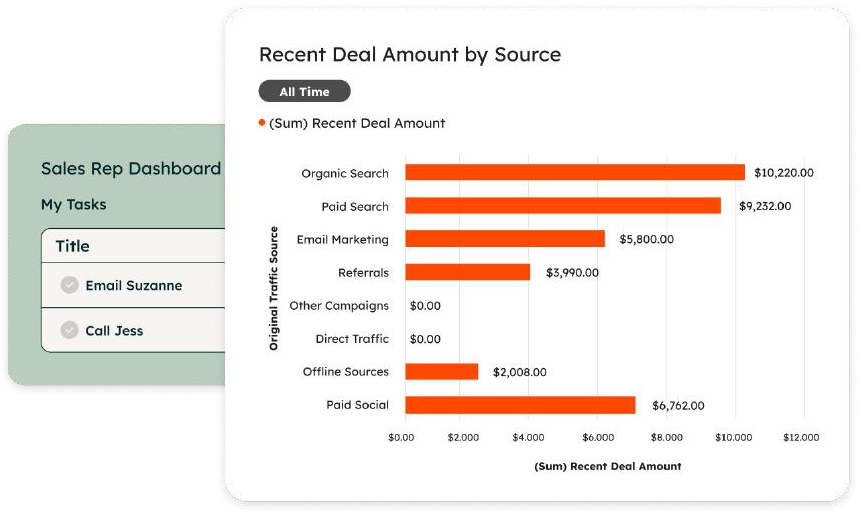
That’s what marketing automation software, analytics dashboards, and customer relationship management (CRM) platforms are for.
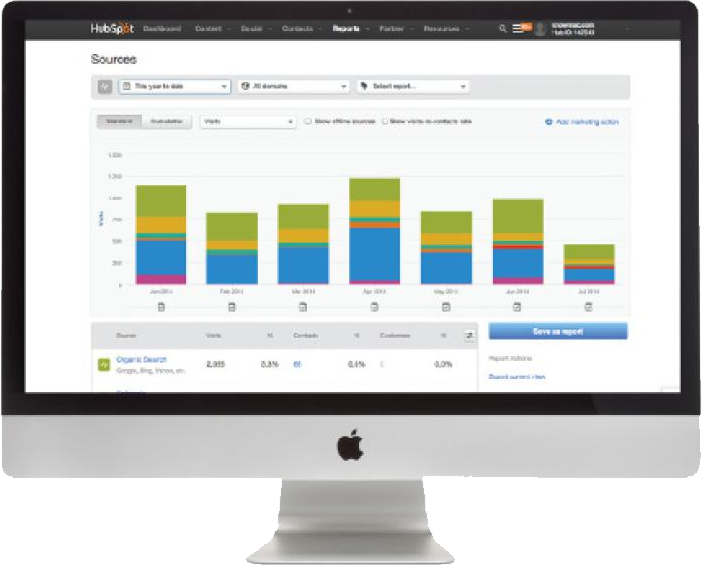
For example, we favor HubSpot’s automation software and its focus on closed-loop reporting. This useful tool allows sales to work with marketing to discover the best lead sources, tying every lead, customer – and ultimately – dollar back to the marketing initiative that created them.


How Can a Digital Marketing Agency Help?
If measuring ROI indicators or integrating technology seems overwhelming, then a digital marketing agency might be a powerful ally. They can help you build a framework for measuring ROI, one that will ultimately create a closed-loop process that uses the best marketing automation for your business.
Aside from the numbers, most agencies also provide expertise for marketing, sales, and IT alignment. Many companies struggle with ROI simply from a standpoint of not having these teams on the same page, but reaching digital marketing goals is nearly impossible without integrating a holistic strategy that each team is willing to buy into wholeheartedly.
Most digital marketing agencies have deep experience measuring ROI—as well as those “number within the numbers” that help drive it—because that is what their accounts are measured on. They’ll help you set realistic goals, and they’ll typically bring the right tools to the table to create visibility around the key metrics that will drive you toward a higher ROI.

Can an Agency Even Begin to Understand My Business?
Digging in to understand a new company’s business and the nuances about what drives their customers’ behaviors definitely takes time. In our eyes there’s a decisive starting point: a preliminary diagnostic assessment.
Completing this assessment is one of the first things we do with our customers. It allows us to see which channels are currently in use, how effectively they’re performing, and whether there are any glaring gaps.
This logical starting point gives us a clear framework for setting preliminary digital marketing objectives. From here, we can break down the process step by step, moving from high-level goals to specific metrics, and start determining:
Remember: Set a
Framework, Then Evolve It
In closing, we’ll return to the important message where we began this guide: don’t stress over finding an exact starting point. Set a baseline to the best of your ability, and then tweak your process over time.
While a company’s ROI inherently has its own set of variables, trying to gather every single aspect typically leads to doing nothing instead of something.
Download your digital copy of the "Guide for Measuring Digital Marketing ROI"

A Potential Partner

We’re Knowmad, an Inbound Marketing Agency with a passion for advancing business online.
Can your business benefit from partnering with a digital marketing firm?
A no-cost, no-obligation digital marketing assessment will help you uncover areas of opportunity as well as potential pitfalls to avoid. In 30 minutes or less, a phone conversation with one of our online marketing experts will help you identify:
01.
02.
03.